Call us now:
In manufacturing, there is no such thing as a “small” delay. A missing crate of fasteners or a delayed shipment of raw polymer isn’t just a logistics hiccup—it’s a catastrophic event. When a production line stops because a component didn’t arrive on time, you aren’t just losing the cost of the transport; you’re paying a full crew to stand around watching a machine stay silent.
The industry standard is to rely on “network” carriers—the giants who group your pallet with fifty others from fifty different companies. But for a manufacturer, the network model is a gamble. You’re trading reliability for a slightly lower line-item cost, and in a Just-in-Time (JIT) environment, that is a dangerous trade.
The Hidden Cost of the “Shared” Model
The problem with shared transport is that your urgency is invisible to the carrier. To a national network, your “urgent” production material is just another pallet in a hub. If a sorting belt breaks in a depot three counties away, your shipment sits.
The consequences of a missed transport slot ripple through your entire operation:
- Idle Labour: Your skilled workforce is on the clock, but the machines are off.
- Contractual Penalties: Missing your own delivery window to a Tier 1 supplier often triggers heavy financial penalties.
- Panic Logistics: You end up paying “emergency” premiums for a last-minute courier to rescue a shipment that should have been there yesterday.
When you move from shared transport to dedicated transport, you stop being a number in a system and start owning the vehicle.
The Strategic Value of Dedicated Movements
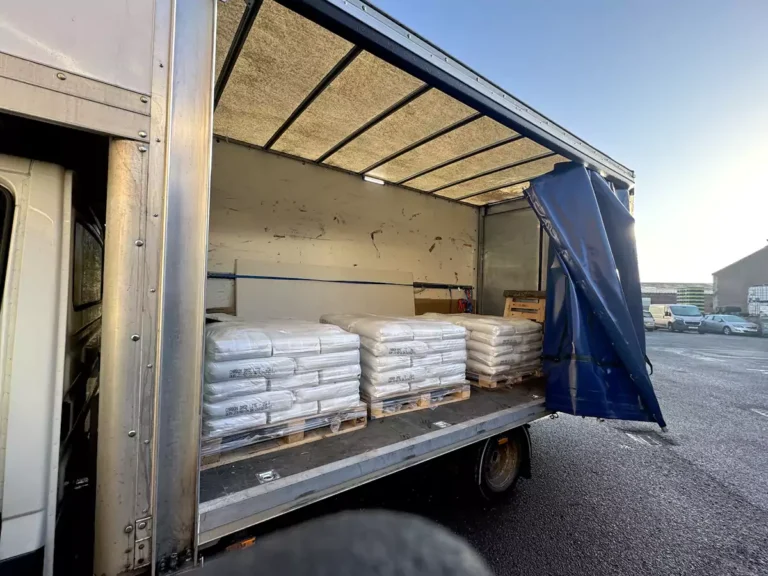
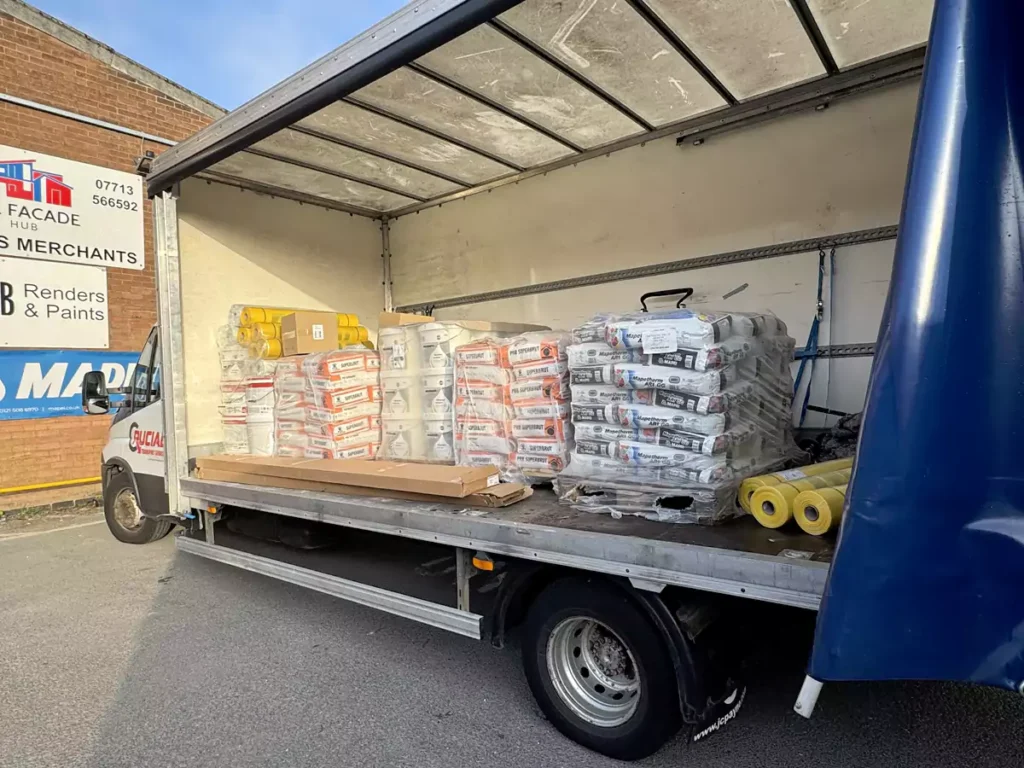
Dedicated transport means the truck is yours. It goes from your door to the destination with no stops, no hubs, and no “sorting” errors. For manufacturers, this is the only way to manage three critical types of movement:
Urgent Component Recovery When a supplier lets you down or a part fails, you need a “hotshot” delivery. A dedicated vehicle can collect the replacement and drive it straight to your line, bypassing the 24-hour lag of a standard network.
Inter-Site Synchronization If you’re moving semi-finished goods between two of your own facilities, you need a rhythm. Dedicated transport allows you to synchronize your output at Site A with the intake at Site B, ensuring the flow of materials never stutters.
Finished Goods Precision Your customer doesn’t care about your logistics challenges; they care that the product arrived at 08:00 as promised. Dedicated transport removes the “window of uncertainty,” allowing you to give your clients a precise arrival time.
Stop Playing “Logistics Roulette”
If your current transport strategy involves crossing your fingers and hoping the pallet arrives before the shift starts, you’re operating on borrowed time. The transition to dedicated transport is about moving from a reactive state (fixing problems) to a proactive state (preventing them).
Crucial Transport provides that critical bridge for manufacturers. Based in Nuneaton, we handle collections within a 20-mile radius and deliver across the UK. We don’t do “hubs” or “sorting centers”—we provide dedicated movements that ensure your materials move as fast as your production line.
If you’re tired of the uncertainty of network carriers, contact Crucial Transport. Let’s figure out a transport schedule that actually supports your production rather than hindering it.